


news 2026
« BACK
 Rainfall shapes bird populations
 How stepping into nature affects the brain
 From algae to biofuel: Western study opens doors to cheaper, cleaner fuel sources
 Genetic factor behind who may and may not benefit from opioids prescribed for pain
 Night owl or early bird? Study finds sleep categories aren’t that simple
 In polar regions, microbes are influencing climate change as frozen ecosystems thaw, McGill review finds
 Study identifies most effective methods for early detection of tench, an invasive freshwater fish
 Freshwater browning threatens growth and populations of economically important fish, McGill researchers say
 Irradiated cannabis might still harbour toxic fungi and residues, McGill study finds
 Lupus: discovery of markers to identify patients most at risk
Life Sciences
Results 1 - 15 of 15.
Environment - Life Sciences - 09.03.2026
Tree cover shapes freshwater ecosystems over millennia
In-person class cancellation and work-from-home / Annulation des cours en présentiel et télétravail In-person class cancellation and work-from-home / Annulation des cours en présentiel et télétravail. McGILL ALERT! Due to freezing rain all'in-person classes and activities on Wednesday, March 11, will be cancelled.
Environment - Life Sciences - 03.03.2026
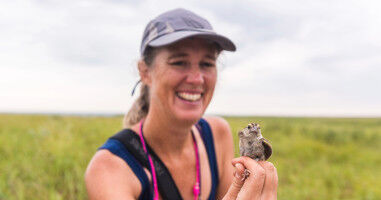
Scientists have long focused on rising temperatures to understand how climate change is reshaping the natural world. But there's a critical blind spot in that picture: rain. A new global study reveals precipitation has been largely overlooked in studies of how climate change impacts birds, even though it can be just as influential as temperature.
Life Sciences - Environment - 26.02.2026
Neuroscience review demonstrates that connecting with nature shifts brain activity linked to attention and relaxation, helping explain why time outdoors feels restorative Spending time in nature, even briefly, triggers changes in the brain that calm stress, restore attention and quiet mental clutter, a new study has found.
Life Sciences - Health - 20.02.2026
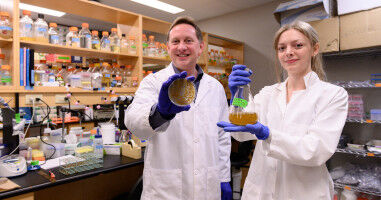
A researcher's keen eye and spirit of curiosity led to the discovery of a new method for cell engineering - a finding that opens doors to more sustainable sources for everything from fuel to vitamin supplements. Western graduate Emma Walker, PhD'25, uncovered a more effective way to deliver DNA into diatoms, single-celled algae found near the surface of oceans, lakes and rivers.
Life Sciences - Physics - 18.02.2026
Researchers alter protein structures with novel method
A novel method to manipulate the inner structure of cells connects several scientific fields and could represent a significant step in the treatment of neurodegenerative diseases, such as Alzheimer's and Parkinson's disease. Dr. Travis Craddock, a professor of biology at the University of Waterloo and Canada Research Chair in Quantum Neurobiology, led the research team that is the first to use weak magnetic fields and isotopes to change the structure of cells.
Environment - Life Sciences - 16.02.2026
Researchers optimize process for converting human urine into clean energy
The study found higher concentrations of urine are most effective in powering microbial fuel cells, which simultaneously remove pollutants and produce electricity Researchers at McGill University have improved the efficiency of a method for converting human urine into clean energy. The method employs microbial fuel cells (MFCs), which use bacteria to turn organic waste into electricity, providing a sustainable and low-cost means of treating wastewater while generating energy from an abundant source.
Life Sciences - Psychology - 13.02.2026
Which childhood abuse survivors are at elevated risk of depression? New study provides important clues
Researchers identify a gene network linked to higher depression risk in women, a step toward finding biological markers for the disorder Scientists have identified a pattern of gene activity present in some female survivors of childhood abuse that is associated with an elevated risk of depression.
Life Sciences - Environment - 12.02.2026
Plants retain a ’genetic memory’ of past population crashes
Examining genetic makeup can help conservationists understand which populations are better equipped to survive environmental change,Öland-use change and disease Researchers at McGill University and the United States Forest Service have found that plants living in areas where human activity has caused population crashes carry long-lasting genetic traces of that history, such as reduced genetic diversity.
Health - Life Sciences - 04.02.2026
UCalgary-led study reveals a genetic factor behind who may and may not benefit from opioids prescribed for pain Findings from international and cross-faculty collaboration provide insight on responses, including why some people may be at higher risk of dependency A University of Calgary-led international research team has identified a genetic factor that may explain why people respond so differently to opioid pain medications, and why some individuals face greater risk of side-effects including dependency.
Health - Life Sciences - 02.02.2026
Scientists identify five biological sleep-wake profiles linked to different health and behaviour patterns, helping explain why sleep schedules affect people differently The familiar labels "night owl" and "early bird," long used in sleep research, don't fully capture the diversity of human internal clocks, a new study has found.
Environment - Life Sciences - 26.01.2026
A global synthesis shows microbial activity is accelerating carbon release and mobilizing toxins, complicating climate projections Microbes across Earth's coldest regions are becoming more active as glaciers, permafrost and sea ice thaw, accelerating carbon release and potentially amplifying climate change, according to a new international review from McGill University.
Life Sciences - Environment - 21.01.2026
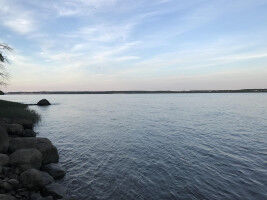
McGill study identifies most effective methods for early detection of tench, an invasive freshwater fish As the Eurasian invader moves up the St. Lawrence River toward the Great Lakes, researchers offer practical tools to improve detection and contain spread As tench continue to spread through the St. Lawrence River, a study from McGill University provides fisheries managers with guidance on how to detect the invasive species, an essential first step in preventing it from reaching new waters.
Environment - Life Sciences - 19.01.2026
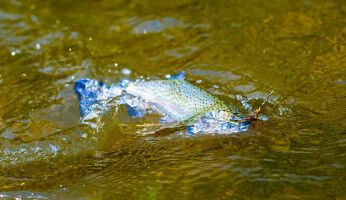
Study takes a holistic approach and looks at the phenomenon's broad impacts on biodiversity in North America, Europe Freshwater browning is stunting fish growth of some species, shrinking populations of others and changing the composition of fish communities, McGill-led research suggests. "Browning" refers to freshwater bodies turning tea-coloured, a phenomenon driven by higher levels of dissolved organic matter and/or higher levels of iron in the water.
Health - Life Sciences - 15.01.2026
Researchers raise concerns about possible health risks for vulnerable users, point to a need for better methods and safeguards Gamma irradiation, an industry-standard sterilization method for medicinal and recreational cannabis, does not fully eliminate toxic fungi or their chemical residues, a McGill University study has found. Current testing practices may also miss contamination, raising concerns about health risks for vulnerable users, particularly those with weakened immune systems.
Health - Life Sciences - 06.01.2026
An international team discovers three markers that can be used at diagnosis to determine the risk of systemic lupus progressing to a severe form of the disease An international team, led by Paul R. Fortin of Laval University, has identified three markers that can be used to determine, at the time of diagnosis, the risk of lupus developing into a severe form of the disease.


