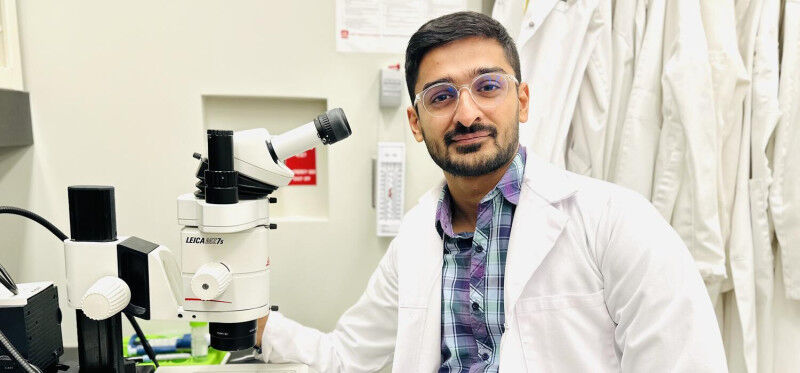
Muhammad Bilal becomes one of six residents of the National Centre for Veterinary Parasitology, combining PhD research, clinical training and board certification Taylor Charlebois, Veterinary Medicine
A University of Calgary graduate student has been awarded a highly competitive residency that places him among a small group of future specialists shaping the next generation of animal health care in North America.
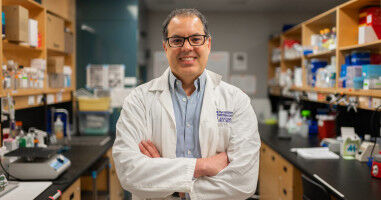
Dr. Muhammad Bilal, DVM, a PhD candidate in the Faculty of Veterinary Medicine (UCVM), has been awarded a residency through the National Centre for Veterinary Parasitology (NCVP), a competitive program jointly serving veterinary academia and the animal health industry across Canada and the United States. It is the only program of its type in North America.
Bilal is developing an updated, non-invasive method of detecting external parasites such as cattle lice, which could have a significant impact on livestock industries.
As the Merck Animal Health NCVP resident, Bilal will complete a dual training path that combines advanced research and clinical specialization. Merck is a research-intensive company that aims to deliver innovate health advancements in care for diseases in both humans and animals.
Over the next three years, Bilal, who has a Doctor of Veterinary Medicine degree from the University of Arid Agriculture in Pakistan, will complete his PhD while receiving clinical training in veterinary parasitology, followed by a one-year postdoctoral fellowship. Upon completion, he will be eligible to sit the board-certification exams for the American College of Veterinary Microbiologists (ACVM) , a key credential for specialists in the field.
Bilal is one of only six NCVP residents currently training in North America, and the award provides approximately $250,000 support over the course of the program.
"The NCVP residency represents a unique opportunity to refine my parasitology skills at the highest professional level," says Bilal. "Combining residency training with my PhD research on novel molecular approaches for ectoparasite detection allows me to contribute innovative diagnostic tools that can directly impact animal health and welfare."
Expanding UCVM’s Scope
For UCVM, the award represents an early success in expanding its residency and board-certification programs, a strategic priority for strengthening advanced clinical training and specialist expertise within the faculty and its communities.
Beyond its academic significance, the residency also strengthens ties between UCVM research and industry partners. As part of his training, Bilal will spend work with the Diagnostic Services Unit (DSU), helping translate innovative research tools into practical diagnostics used by veterinarians and producers.
That translational focus aligns closely with Bilal’s PhD research, which seeks to modernize the diagnosis and surveillance of external parasites by developing tests that detect parasite DNA directly from the surface of the host skin using simple, non-invasive skin swabs. By pairing skin swabbing with advanced molecular techniques, the team aims to detect parasite infestations earlier and more accurately than current approaches as well as detecting drug resistant parasites.
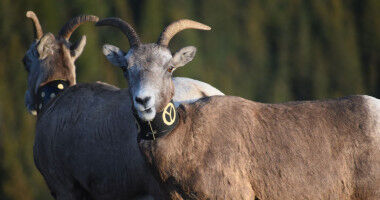
The initial focus is on cattle lice, one of the most economically significant parasites affecting the beef industry causing severe irritation, anemia, reduced weight gain, and overall declines in animal health and welfare.
"Having a trainee like Muhammad in this program highlights both the strength of our parasitology ecosystem and our focus on innovation-driven training," says Dr. Jeroen De Buck , PhD, associate dean of research and innovation at UCVM. "It positions UCVM as a place where new diagnostic ideas are actively shaped by future specialists."
This new approach to diagnostics will enable more informed parasite control decisions, earlier interventions, and more sustainable control. The long-term goal is to extend the approach to other economically important ectoparasites, further bridging advanced research, clinical training, and real-world animal health needs.
Bilal is supervised in his PhD studies by Dr. John Gilleard , PhD.
Headquartered at Oklahoma State University , the NCVP is funded by multiple animal health industry sponsors to support advanced training in clinical veterinary parasitology across North America for board certification through the ACVM.