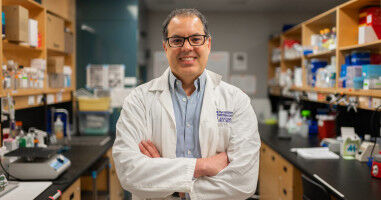
PhD candidate Jethro Langley uses light to visualize results from the One-pot DTECT kit. Riley Brandt, University of Calgary
PhD candidate Jethro Langley uses light to visualize results from the One-pot DTECT kit. Riley Brandt, University of Calgary Dr. Pierre Billon, PhD, was frustrated with the time it took to get genetic analysis done at specialized private labs. Results of DNA samples that he needed for his research weren't available for weeks and sometimes months. Outsourcing to genome facilities was also expensive. Billon was convinced there was another approach that could provide results faster and in a more cost-effective way. With the help of his research associate Lou Baudrier and visiting student researcher Orléna Benamozig, they conceived and demonstrated a way to do it. "We've developed a method which is so simple to implement and use that any lab, anywhere in the world can readily establish their own kit, to achieve a same-day analysis of genetic mutations for a few cents per sample," says Billon, assistant professor at the Cumming School of Medicine (CSM). "We're really excited at our homemade system's capabilities and its versatility for various applications in the clinical setting." The system, called One-pot DTECT, is a compact kit containing multiple enzymes and unique DNA fragments that reveal and detect genetic signatures.
TO READ THIS ARTICLE, CREATE YOUR ACCOUNT
And extend your reading, free of charge and with no commitment.