A study suggests that it may be possible to alleviate this autoimmune disease by preventing platelets from binding to white blood cells
Certain autoimmune diseases such as rheumatoid arthritis and lupus could be alleviated, or even cured, by preventing blood platelets from binding to immune system cells. This is the suggestion of a study published in the Journal of Clinical Investigation by a team from Université Laval and the Centre de recherche du CHU de Québec -Université Laval.
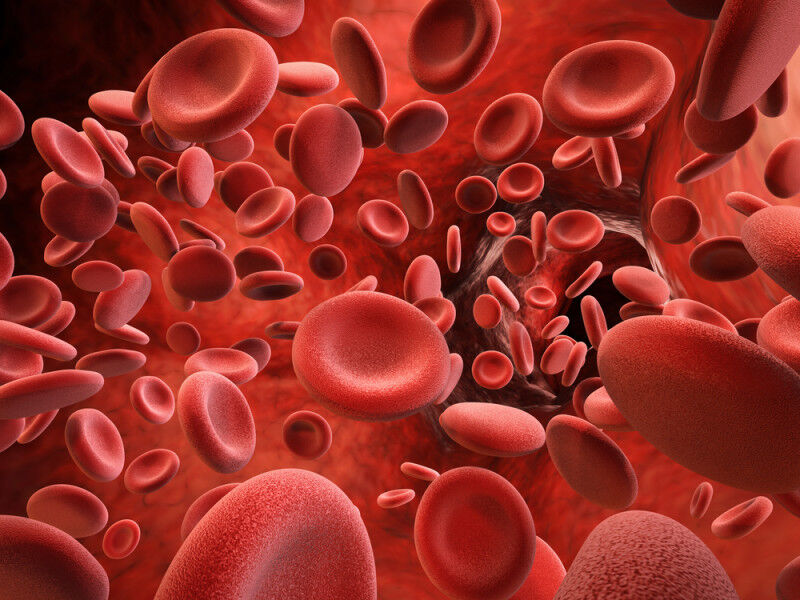
"The role of platelets in stopping bleeding has been known for more than a century," points out the study’s leader, Éric Boilard, a professor at Université Laval’s Faculty of Medicine. Their flattened shape enables them to seal gaps in blood vessels. What’s more, when activated, they develop "arms" to which the white blood cells attach, immobilizing these immune cells at the site of injury. They are then well positioned to defend the body against a possible microbial invasion."
In certain autoimmune diseases such as rheumatoid arthritis and lupus, white blood cells leave the bloodstream and infiltrate tissues, causing chronic inflammation. "We wanted to find out whether platelets are involved in this process, even if there is no bleeding," summarizes Professor Boilard.
To achieve this, the research team first reproduced as closely as possible the vascular environment in which rheumatoid arthritis occurs. "We used an instrument with synthetic tubing through which liquid can be circulated to study the adhesion and migration of blood elements such as platelets and white blood cells", explains the researcher.
First, the walls of the tubing were treated to allow antibodies to adhere to them and form clumps, like those found inside the blood vessels of people with autoimmune diseases. The scientists then added white blood cells (neutrophils) from people with rheumatoid arthritis to the system.
under these conditions, the white blood cells go straight through," reports Professor Boilard. On the other hand, when only platelets are added, they bind to the antibodies. When platelets and white blood cells are introduced, the platelets bind to the antibodies and also enable the white blood cells to immobilize on the antibodies. The presence of platelets is therefore essential for the adhesion of white blood cells when they are in a moving liquid such as blood."
To validate this hypothesis in vivo, the scientists used transgenic mice used as models for the study of rheumatoid arthritis. "In addition, we inserted into their genome the human gene that codes for the protein that links platelets and white blood cells," adds Professor Boilard. In these mice, the severity of the disease is amplified compared to that observed in mice lacking this binding protein. On the other hand, when we administer an antibody that prevents platelets from binding to white blood cells, disease symptoms diminish. There even appears to be a cure."
According to the researcher, this proof of concept is not purely theoretical. "It could work in humans. There are already therapeutic antibodies that can prevent the binding between platelets and white blood cells. Should clinical trials produce positive results, we’ll need to strike the right balance between the positive and negative outcomes of platelet-white blood cell binding. We want to alleviate the symptoms of autoimmune diseases in sufferers, but we don’t want to impair their ability to defend themselves against microorganisms."
The signatories of the study published in the Journal of Clinical Investigation are Marie Bellio, Isabelle Allaeys, Étienne Doré, Myriam Vaillancourt, Tania Lévesque, Mélina Monteil, Nicolas Vallières, Philippe Desaulniers, Nicolas Bertrand, Steve Lacroix, Paul Fortin, Clémence Belleannée and Éric Boilard , of Université Laval, Valance A. Washington, Oakland University, and Yotis Senis, Université Aix-Marseille.