Biomaterial increases stem cell survival fivefold in preclinical tests, paving the way for advances in regenerative treatments
A new injectable gel developed by researchers at McGill University and Kyoto University could enable stem cell-based treatments for swallowing disorders.
While stem cells have the potential to repair damaged swallowing muscles, ensuring their survival after injection has been a major challenge. In a preclinical study published in Biomaterials, the new approach improved stem-cell survival by more than five times compared with traditional methods.
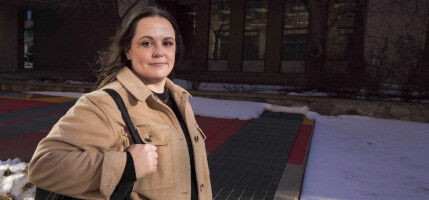
"This minimally invasive approach could one day help restore normal swallowing function for patients whose current options are limited to rehabilitation exercises or surgery," said senior author Nicole Li-Jessen, Associate Professor in McGill’s School of Communication Sciences and Disorders, RI-MUHC’s Associate Investigator and Canada Research Chair in Personalized Medicine of Upper Airway Health and Diseases.
The gel has already undergone Phase I and II clinical testing in Japan as part of an experimental cancer vaccine, she added.
Swallowing disorders affect about eight per cent of the world population, including stroke survivors and patients treated with radiation for head and neck cancer. Consequences can range from malnutrition and dehydration to life-threatening pneumonia.
Giving cells ’breathing room’
In previous research, stem cells have been grouped into clusters that can become so dense that cells are cut off from oxygen and die.
To address this, the team created a hybrid technology that mixes stem cells derived from fat tissue with microscopic fragments of a special biodegradable gel.
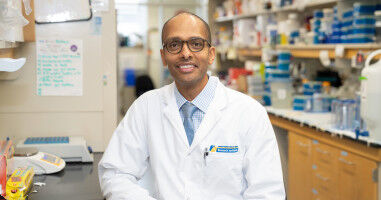
"The gel fragments act like scaffolding. They create pathways that give the cluster breathing room, allowing oxygen and nutrients to circulate while keeping it intact," said first author Dr. Hideaki Okuyama , a visiting researcher at Kyoto University’s Department of Otorhinolaryngology-Head and Neck Surgery, who trained as a postdoctoral fellow at McGill under Li-Jessen before returning to Japan.
In lab tests, the hybrid stem-cell clusters were about 5.6 times more viable than standard clusters after one week, and they released higher levels of substances that help repair damaged tissue. In rats, a single injection led to greater stem cell retention and a nine-per-cent improvement in swallowing-muscle activity after three weeks.
Researchers are now studying the gel’s long-term durability and exploring whether the approach could be adapted to treat other conditions, including vocal cord injury, age-related muscle loss and muscular dystrophy.
About the study
" Click-crosslinked nanogels integrated into 3D stem cell spheroids enhance regenerative function for swallowing muscle repair " by Hideaki Okuyama and Nicole Li-Jessen et al., was published in Biomaterials.
This research emerged from a long-standing partnership between McGill University and Kyoto University, bringing together McGill’s expertise in biomedical engineering and voice and swallowing science with Kyoto’s pioneering work in nanogel chemistry and clinical otolaryngology.